
One freehold goes in. Six leaseholds come out. Title splitting is one of the most talked-about strategies in UK property right now. Most of the teaching stops at the deal. What decides whether it actually works is what it does to your accounts and your tax.
What’s on this page? ▾
What title splitting actually is
A company buys a block, say six flats, on a single freehold title. The title is split and six long leases are granted, so each flat becomes a separate leasehold that can be mortgaged and refinanced on its own. One title becomes six units. The freehold left behind is usually worth very little once the leases are out.
The value comes from the parts being worth more than the whole. A block bought at a block price, then split, can refinance flat by flat at individual-unit values, letting you pull out most or all of your original money and hold six financed units.
Why it takes two owners
A title split needs two separate owners: one to hold the freehold, one to hold the leases. Most commonly that’s two companies set up in a group. It can also be a mix, such as you holding the freehold personally while a company holds the leases.
The structure you choose drives the tax. When the two owners are companies in a group, transfers between them can move across without triggering stamp duty or capital gains tax. Where they’re not a group, that same transfer is treated as a sale at market value, which can cost tens of thousands. Getting the structure and the order right is where the money is made or lost — it’s important enough to have its own post, on group relief.
If you’re weighing up personal versus company ownership more broadly, our guide on using a limited company for your buy-to-let properties covers the wider decision.
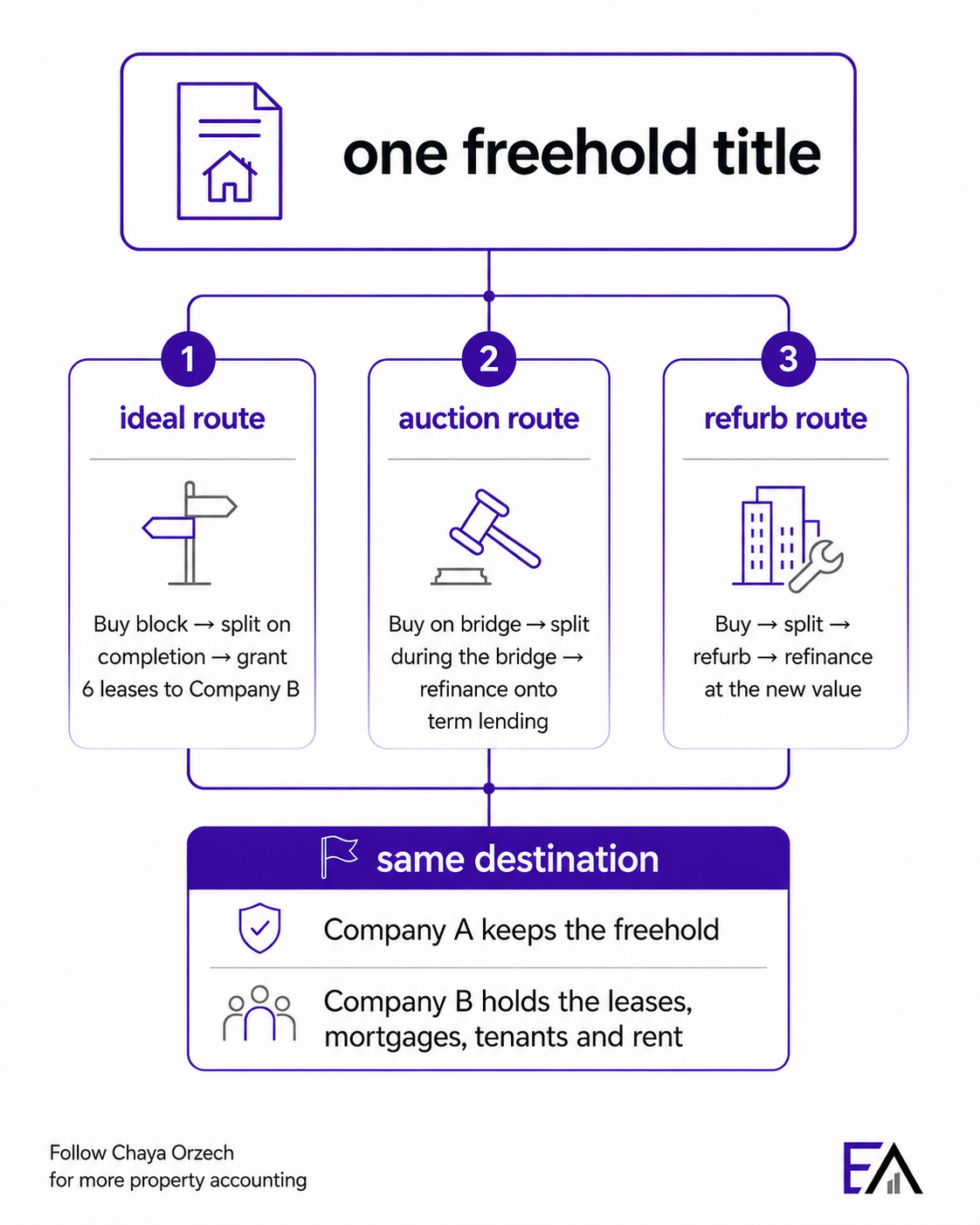
The three routes a split takes
The clean route is the textbook one: everything happens on completion. Freehold in, leases granted, done.
The auction route is tighter. You have 28 days to complete and no time for architects, solicitors and title drafting, so the whole block completes on a bridge, on one title. The split gets done during the bridge and lands when you refinance onto term lending.
The refurb route stretches it out: buy it, split it, do the works, then refinance against the new value and pull your money back out.
Three routes, one destination, very different paperwork.
A worked example
Say you buy a block of six flats for £600,000 through Company A. You grant six long leases across to Company B, the group’s sister company, for a peppercorn rent. Company B now holds six separate leasehold titles, each independently mortgageable.
Valued individually, the flats are worth £130,000 each, so £780,000 in total. Refinanced at 75%, that’s £585,000 of borrowing against units that cost you £600,000 to buy and split. You’ve recovered almost all your capital and you hold six financed, income-producing flats, with the freehold sitting quietly in Company A. None of that works if the leases are granted between owners who aren’t a proper group, because the transfer is then taxed at market value.
Why the accounts have to tell the story
Two owners, leases granted between them, mortgages moving, cash pulled out at refinance. If your bookkeeping doesn’t record what happened, at what value and why, you can’t prove your tax position or claim the reliefs that make the strategy work. The deal is half the job. The accounts are the other half. Every lease grant, every intercompany balance and every refinance draw has to be booked correctly, or a clean strategy turns into a messy enquiry.
What to do next
If you’re planning a title split, set the structure up before you buy, not after. The order of events decides the tax, and it’s very hard to unwind once contracts are signed. We build the group, book the deal correctly and keep the accounts telling the right story from day one.
Book a free discovery call and we’ll make sure the structure and the accounts are right before you buy.
Frequently asked questions
Do you need two companies for a title split?
You need two separate owners, one for the freehold and one for the leases. Most people use two companies in a group so transfers between them are tax-efficient, but it can also be a personal-plus-company split. Which is right depends on your wider structure.
Do I pay stamp duty or capital gains tax when I split a title?
Not if the owners are companies in a proper group and the conditions are met. Group relief can remove the stamp duty and the capital gains charge on internal transfers. Get the structure wrong and the same moves are taxed at market value.
Can I sell the flats individually after a split?
Yes. Once split, each flat is a separate leasehold you can sell on its own. Many investors instead refinance and hold, drawing money out against the higher combined value. Both work; it comes down to what suits your strategy.
How long does a title split take?
It can take several months, so build a realistic timeline into your plans. Even a clean split involves plans, boundaries and title drafting, and the auction and refurb routes run over a bridge before landing at refinance. It is rarely a quick job.