An HMO (house in multiple occupation) is taxed under the same rules as any other rental property. But the costs, the licensing and the record-keeping look nothing like a single let, and that’s where HMO landlords either save money or lose it. This guide explains what you can claim, what you can’t, and why, in plain English. It’s written for HMO landlords and HMO investors, and for HMO developers and builders who convert houses into HMOs to let or sell.
What’s on this page? ▾
- What counts as an HMO
- From wreck to HMO: what you can claim at each stage
- Repairs or improvements? The difference that changes your tax bill
- Furniture: why the first set gets no tax relief
- Running costs you can claim every year
- 5% VAT on converting a house into an HMO
- Know which HMO is making money
- HMOs and limited companies
- FAQs
What counts as an HMO
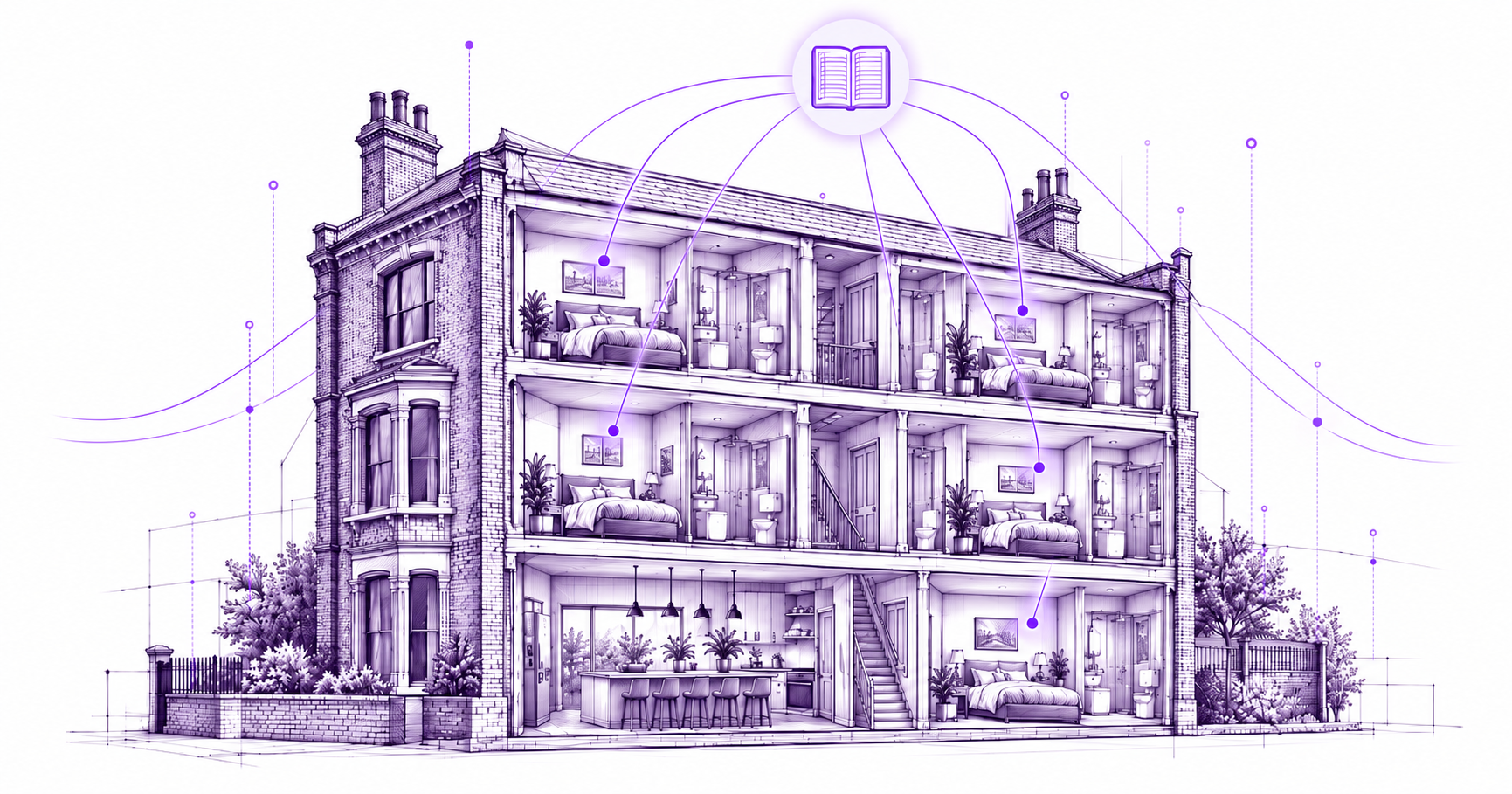
An HMO is a property let to three or more tenants from more than one household who share a kitchen or bathroom. If five or more people live there, you need a mandatory HMO licence from the council. Many councils also require a licence for smaller HMOs, so check your local rules before you buy.
From wreck to HMO: what you can claim at each stage
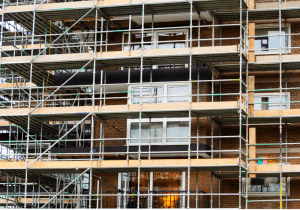
A common HMO strategy is to buy a run-down house, strip it back and convert it. Here’s how the tax works at each stage.
| Stage | Example costs | Tax treatment |
|---|---|---|
| 1. Buying | Purchase price, stamp duty, solicitor, survey | Not claimed against your rental income. Added to the property’s cost, which reduces your capital gains tax when you sell. |
| 2. Stripping out and converting | New walls, en-suites, extra kitchen, fire doors, rewiring, new heating | Not claimed against your rental income. These are capital improvements, so they’re added to the property’s cost and reduce your capital gains tax when you sell. |
| 3. First furniture | Beds, wardrobes, sofas, kitchen appliances | No tax relief at all (see below). |
| 4. Mortgage interest | Interest on the buy-to-let mortgage | If you own it personally: a 20% tax credit (Section 24). If a limited company owns it: deducted in full. |
| 5. Letting it out | Licence fee, bills, insurance, agent fees, repairs, cleaning | Claimed against the rental income every year. |
| 6. Selling | Sale price minus purchase and improvement costs | Taxed as a gain. Personally: capital gains tax at 18% or 24%. In a limited company: no capital gains tax, the gain is added to the company’s profit and taxed as part of corporation tax. |
One point catches people out: if you buy a house that can’t be lived in, the work to make it usable is treated as an improvement, even if some of it looks like a repair. A new boiler in a house that had no working heating when you bought it is part of the cost of the property, not a repair.
Repairs or improvements? The difference that changes your tax bill
A repair puts something back the way it was. You can claim it against your rental profits straight away.
An improvement makes the property better or bigger than it was. You can’t claim it against your rental profits. It’s added to the property’s cost and only helps when you sell.
| Repair: claim now | Improvement: claim when you sell |
|---|---|
| Replacing a broken boiler with a similar one | Adding a boiler where there wasn’t one |
| Fixing a leaking roof | Building a loft conversion for an extra bedroom |
| Redecorating between tenants | Adding en-suites to every room |
| Replacing worn kitchen units like-for-like | Fitting a second kitchen for the HMO |
| Replacing old fire doors with new ones | Fitting fire doors and alarms for the first time as part of the conversion |
Most HMO refurbishment invoices contain both. On a £40,000 job, asking your builder to list the repairs and the improvements separately can bring forward thousands of pounds of tax relief. Your accountant should help you split them. If you’re not sure which is which, get in touch.
Furniture: why the first set gets no tax relief
This surprises a lot of HMO landlords. When you furnish an HMO for the first time, you can’t claim the cost of that furniture against your rent. And because furniture isn’t part of the building, it doesn’t reduce your tax when you sell either. It simply gets no tax relief.
Relief only starts when you replace an item. If a bed, sofa or fridge wears out and you buy a similar one, the replacement can be claimed in full under Replacement of Domestic Items Relief.
So for a new HMO, budget for the first furniture as a cost with no tax saving. Keep receipts for everything you buy later, because those replacements are claimable.
Running costs you can claim every year
- HMO licence fees, including renewals.
- Gas, electricity, water and broadband, which landlords usually pay in an HMO.
- Council tax, which is usually the landlord’s bill for an HMO.
- Insurance, agent fees, cleaning and gardening.
- Repairs and maintenance, including replacing fire safety equipment.
- Accountancy fees for the property business.
5% VAT on converting a house into an HMO
If you’re converting a house into an HMO, your builder can charge VAT at 5% instead of 20% on the conversion work. On a £60,000 conversion, that’s £9,000 less VAT. It may be obvious to your builder that it’s an HMO. But if HMRC checks his VAT later, he has to prove the 5% was right, or he pays the missing 15% himself. That’s why he’ll ask for your planning permission or HMO licence application before work starts, so have them ready. Because HMO rent has no VAT on it, you can’t reclaim the 5%, but it’s still a big saving. Our guide to 5% VAT on property conversions explains how to get it.
Converting a house into an HMO? Book a free call before you sign the build contract, and we’ll show you what’s claimable and when.
Know which HMO is making money
The most common problem we see is a landlord who knows the portfolio made money overall, but can’t tell which HMOs are carrying the others. Keep income and costs separate for each HMO. Then you can see which houses have empty rooms, which have high bills, and whether your room prices are right.
HMOs and limited companies
HMOs usually earn more rent than single lets, so the tax rules on rental income hit harder. From April 2027, landlords who own property personally pay higher income tax rates on rental profit: 22%, 42% or 47%. Mortgage interest only gets a 20% tax credit.
A limited company is different. It deducts all of its mortgage interest, pays corporation tax instead of income tax, and pays no capital gains tax on a sale. The gain is added to the company’s profit instead. A company won’t suit everyone, but for HMO investors it’s worth running the numbers before your next purchase. Our guide to limited company or personal name goes through it.
Frequently asked questions
Is an HMO taxed differently from a normal buy-to-let?
The rental income is taxed under the same rules. The difference is in the costs: HMO landlords usually pay the bills, council tax and licence fees, and all of those can be claimed.
Can I claim the cost of converting a house into an HMO?
Not against your rental income. Conversion work such as new walls, en-suites and an extra kitchen is an improvement. It’s added to the property’s cost and reduces your tax when you sell. Genuine repairs to the existing house can be claimed straight away.
Can I claim for furnishing a new HMO?
No. The first set of furniture gets no tax relief. Replacing furniture later can be claimed in full.
Do I pay 5% or 20% VAT on an HMO conversion?
Converting a house into an HMO qualifies for 5% VAT on the building work, as long as your builder has the evidence. You can’t reclaim the 5%, but you still save 15% of the build cost compared with paying the full 20%.
Do HMO landlords have to use Making Tax Digital?
Yes, if your rental and self-employed income together is over £50,000 a year from April 2026, or over £30,000 from April 2027. It’s based on income before costs, and HMOs reach these figures faster because the rent is higher.
Run HMOs and want to know which ones really make money? Book a free call. Free download: the Property Portfolio Tracker, to see every property’s numbers in one place.
Related reading: Section 24 and the April 2027 changes · 5% VAT on property conversions